Frequently Asked Questions
The most-asked questions about ancient rome.
What is Ancient Rome in the broadest sense?
Ancient Rome refers to the civilization that grew from a small settlement on the Tiber River into a vast Mediterranean empire spanning roughly from the 8th century BCE to the 5th century CE. It passed through three major political phases: the Kingdom, the Republic, and the Empire.
Who are the most iconic figures associated with Rome?
Julius Caesar, Augustus, and Nero are probably the names that pop up most often, but figures like Cicero, Spartacus, and Constantine are equally central to the story. The Senate, the patrician-plebeian divide, and the emperors collectively shape the narrative.
What are the three main periods of Roman history?
The Kingdom (c. 753–509 BCE) was a short era of legendary monarchs; the Republic (509–27 BCE) was governed by elected magistrates and a Senate; and the Empire (27 BCE–476 CE in the West) was ruled by a single sovereign. Each period brought distinct political structures and cultural achievements.
How big did the Roman Empire get at its height?
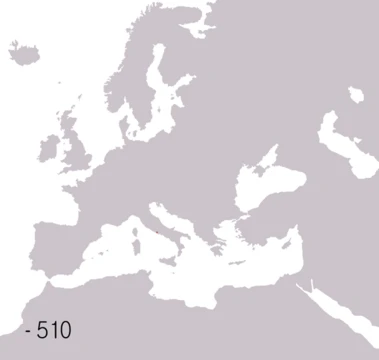
Under Trajan around 117 CE, the empire stretched from Britain to Mesopotamia, encompassing roughly five million square kilometers and a population estimated at sixty to seventy million people. It was the largest contiguous land empire the ancient world had seen.
Why did the Western Roman Empire fall?
There is no single cause; scholars point to a combination of military overstretch, economic inflation, political instability, and repeated barbarian incursions in the 4th and 5th centuries. The conventional endpoint is 476 CE, when the last Western emperor, Romulus Augustulus, was deposed.
What did Rome contribute to the modern world?
Roman law laid the groundwork for much of Western legal tradition, and Latin remains the root of several major languages. Engineering feats like aqueducts, concrete, and road networks also set templates that influenced construction and infrastructure for centuries.
What were the Punic Wars and why do they matter?
Three wars between Rome and Carthage (264–146 BCE) decided who would dominate the western Mediterranean. Rome's eventual destruction of Carthage eliminated its greatest rival and opened the path to Mediterranean hegemony.
What was daily life like for an ordinary Roman?
Most citizens lived in cramped apartment blocks called insulae, ate a diet heavy on bread, olives, and wine, and relied on public baths, fountains, and grain doles for basic comfort. Entertainment ranged from chariot racing at the Circus Maximus to gladiatorial games and theatrical performances.
Where should a newcomer start if they want to understand Rome?
A good entry point is a broad survey of the Republic-to-Empire transition, since that shift from elected leaders to a single ruler reshapes everything that follows. Pairing a general history with primary sources like Cicero's letters or Tacitus's Annals gives both context and a feel for how Romans saw themselves.
Is the 'Fall of Rome' really a single event?
The phrase usually refers to the gradual disintegration of centralized Western authority from the 3rd through 5th centuries rather than one dramatic collapse. The Eastern (Byzantine) half actually survived for another thousand years, so the 'fall' is really a Western phenomenon.