
Spectacles in ancient Rome
Free spectacles distracted Rome's populace from hunger and boredom.

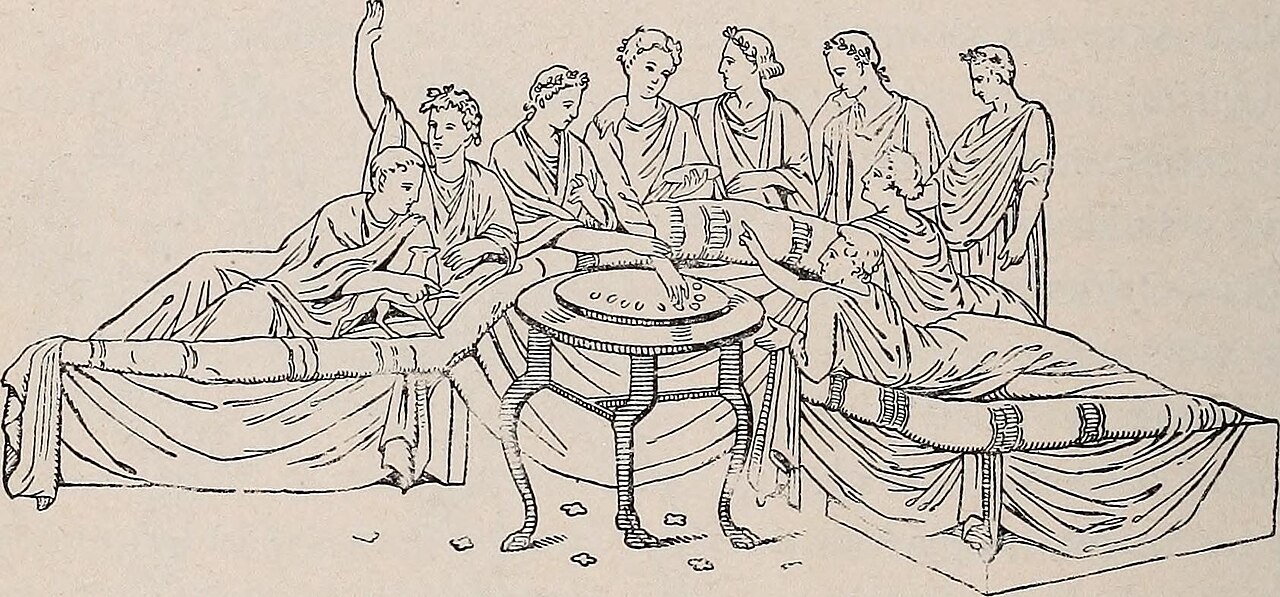
Spectacles in ancient Rome were numerous, open to all citizens, and generally free of charge. They included gladiatorial fights, venationes (fights with ferocious beasts), naumachiae (reproductions of naval battles), chariot races, athletic contests, and theatrical performances by mimes and pantomimes. These spectacles served as a tool for the Roman ruling class to distribute food monthly and to distract the populace, regulating their leisure time with free entertainment on religious holidays or secular occasions.
- type
- Public entertainments
- period
- Ancient Rome, especially Imperial era
- key_figures
- Augustus, Juvenal, Fronto, Suetonius
- purpose
- Distraction, political control, religious observance
- frequency
- Nearly daily; feast days occupied more than half the year
Lore & Background
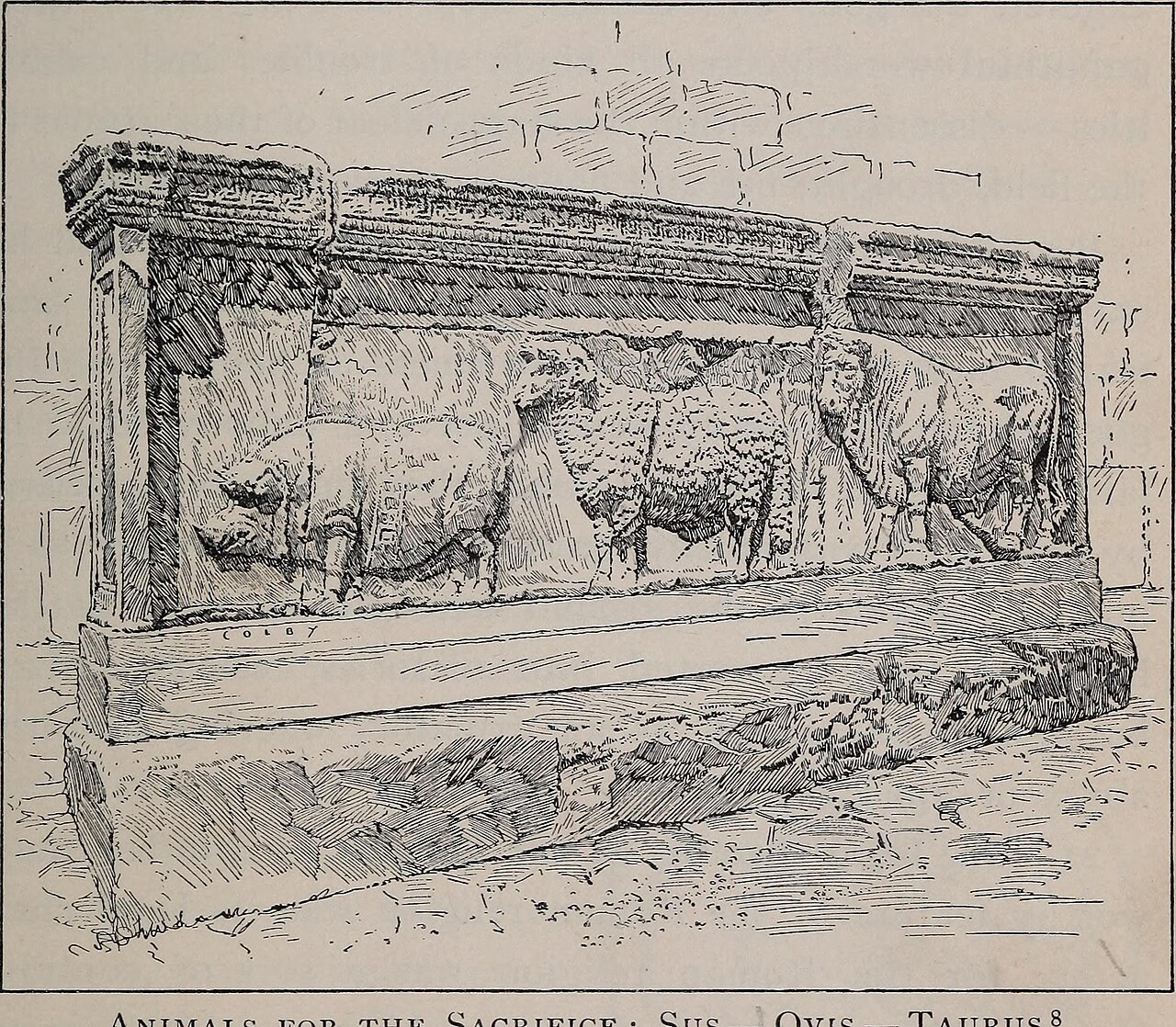
The spectacles originated in religious cults, such as the fishing contest on June 8, originally a substitute sacrifice to Vulcan, and the October horse race, where the winning horse was immolated and its blood used for lustration. Gladiatorial fights, instituted by the state in 105 BCE, began as private tomb cults and retained the term 'munus' (public office) to appease the gods. By the imperial era, audiences had forgotten these religious references, though formalities remained, such as wearing the gala toga and standing during processions.
Reader's Guide
Spectacles in ancient Rome were a central institution for maintaining social order and political power. The Roman ruling class considered it a primary task to distribute food monthly and provide free entertainment, preventing the populace from yawning—a sign of potential revolt. The spectacles occupied leisure time, channeled passions and violence, and strengthened the prince's authority. Despite their religious origins, by the imperial age they had become formalized rituals with astrological symbolism, such as the circus representing the earth and the seven laps of chariot races mirroring the planets. The spectacles thus served as a tool for absolutism, distracting a population where many lived without working at state expense. Their legacy lies in demonstrating how public entertainment can be used to control and pacify a large urban populace.
Did You Know?
- Augustus once presented a rhinoceros at the Saepta Julia and a tiger in a theatrical scene.
- The winning horse in the October race was sacrificed, and its blood used for lustration.
- Spectators had to wear the gala toga; those poorly dressed were forbidden from the middle bleachers.
- The seven laps of chariot races reproduced the orbit of the seven planets and the seven days of the week.
The Patrician-Plebeian Divide and Its Slow Dissolution
In the earliest days of Roman society, a small cluster of families accumulated the bulk of the city's wealth, and from that economic gap the familiar split between patricians and plebeians was born. What began as a marker of prosperity quickly calcified into a hereditary label: once a family was classified as patrician or plebeian, that designation passed down through generations regardless of later fortune. Patricians held the best land, dominated the Senate, and wore the distinctive dyed calceus patricius on their feet as a visible badge of rank. Plebeians, by contrast, were largely laborers and small farmers working patrician-owned plots. Yet the rigid wall between the two groups proved more porous than it appeared. As plebeians won civil rights through the middle and late Republic, many plebeian families grew as wealthy and politically powerful as their patrician counterparts, while some once-distinguished patrician lines slipped into poverty and obscurity. By the second century BC, the old distinction had largely lost its practical force, and the two groups began to blend into a single social stratum. Crucially, however, no amount of wealth could elevate a plebeian family into the patrician ranks; the boundary was social, not economic.
Patronage as the Glue of Roman Society
One of the most pervasive social mechanisms in ancient Rome was the clientela system, a web of mutual obligation linking patrons and clients across class lines. Patricians, who most often occupied the patron role, typically maintained multiple plebeian clients who owed them services ranging from military support in wartime to augmenting the patron's public standing and even contributing toward dowries or ransoms. In return, patrons extended protection, economic assistance, and political advocacy. This arrangement was explicitly business-like in character yet carried deep social weight, functioning as one of the strongest forces binding Roman society into a coherent whole. It simultaneously reinforced patrician privilege by creating a network of dependent supporters. The system proved remarkably durable, persisting from the early Republic through the late period of Roman civilization. For plebeians, who for most of Roman history remained dependent on higher-status individuals, clientela offered a structured path to security and a degree of social recognition that their birth alone could not provide. The relationship was not merely transactional; it shaped daily interactions, commercial dealings, and the broader political culture of the city.
Wealth as Political Currency in the Assembly
Roman political power was inseparable from property. The Centuriate Assembly, the body responsible for declaring war, electing magistrates with imperium, and adjudicating certain legal cases, was organized into groups according to a citizen's wealth and his capacity to furnish his own armor and weapons. Only those Romans who could afford personal military equipment were permitted to serve in the army, a force drawn from both patricians and plebeians alike. This property-based structure extended into the voting mechanism itself: the Equestrian order and Class I together commanded ninety-eight votes, while all lower classes combined held only ninety-five. That narrow margin meant the wealthiest strata could consistently outvote the rest, preserving their grip on military decisions and broader social governance. Later in the Republic, membership in the senatorial class was likewise anchored to a property threshold, the highest of any rank. Census rank, or ordo, thus functioned as a formalized ladder of privilege, with the senatorial and equestrian tiers elevated above ordinary citizens. Wealth did not merely buy comfort; it purchased a voice in the architecture of the state.
Patriarchal Authority and the Limited Sphere of Women
Roman family law placed the male head of household, the paterfamilias, at the apex of a strictly patriarchal structure. He wielded patria potestas, a bundle of legal powers granting him jurisdiction over every member of his familia, including adult sons who might remain under his authority until his death. A father could, however, perform the emancipatio ritual—releasing a son three times in succession—to confer independent legal standing. Women, though recognized as citizens, occupied a fundamentally subordinate position. They could not vote, hold office, or participate in the political sphere. Their legal identity was subsumed under whichever paterfamilias controlled them: father, husband, or occasionally eldest brother, and their children inherited that same status. Three early marriage forms, including the archaic coemptio, which treated the bride as a purchase, transferred a woman from one male authority to another. Yet wealth altered the calculus: affluent women, excluded from public politics, could still exert considerable behind-the-scenes influence over political actions, a quiet power unavailable to their poorer counterparts.
Gallery


Frequently Asked Questions
What were spectacles in ancient Rome?
Spectacles were the broad category of free public entertainments staged for all citizens, covering gladiatorial combat, beast hunts, mock naval battles, chariot races, athletic meets, and theatrical performances. They were the defining feature of Roman public life, particularly during the Imperial era.
How often did Romans actually watch spectacles?
Events were held nearly every single day, and feast days consumed well over half the year. This meant a Roman citizen's leisure time was overwhelmingly structured around attending these free shows.
Why did Roman rulers provide spectacles for free?
The ruling class deliberately paired monthly food handouts with constant entertainment to pacify and distract the populace from hunger and political discontent. It functioned as a tool for regulating the masses' free time and maintaining social order.
What specific types of events counted as Roman spectacles?
The lineup included gladiatorial bouts, venationes (fights pitting humans against ferocious beasts), naumachiae (staged reproductions of naval battles), chariot racing, athletic contests, and performances by mimes and pantomimes. In short, virtually any event staged publicly for a mass audience qualified.
Which historical figures are most linked to Roman spectacles?
Augustus established early regulations governing these events, while later writers such as Juvenal, Fronto, and Suetonius documented, critiqued, and preserved descriptions of the spectacle culture. Their surviving texts are the primary window we have into how these shows operated in practice.
More in Ancient Rome 1-24
Spotted an error? Know more?
This is a living reference — every entry is fact-audited, and reader corrections feed straight into our audit queue. Suggest an edit · See this site's audit record