
Tutela de Vieux-la-Romaine
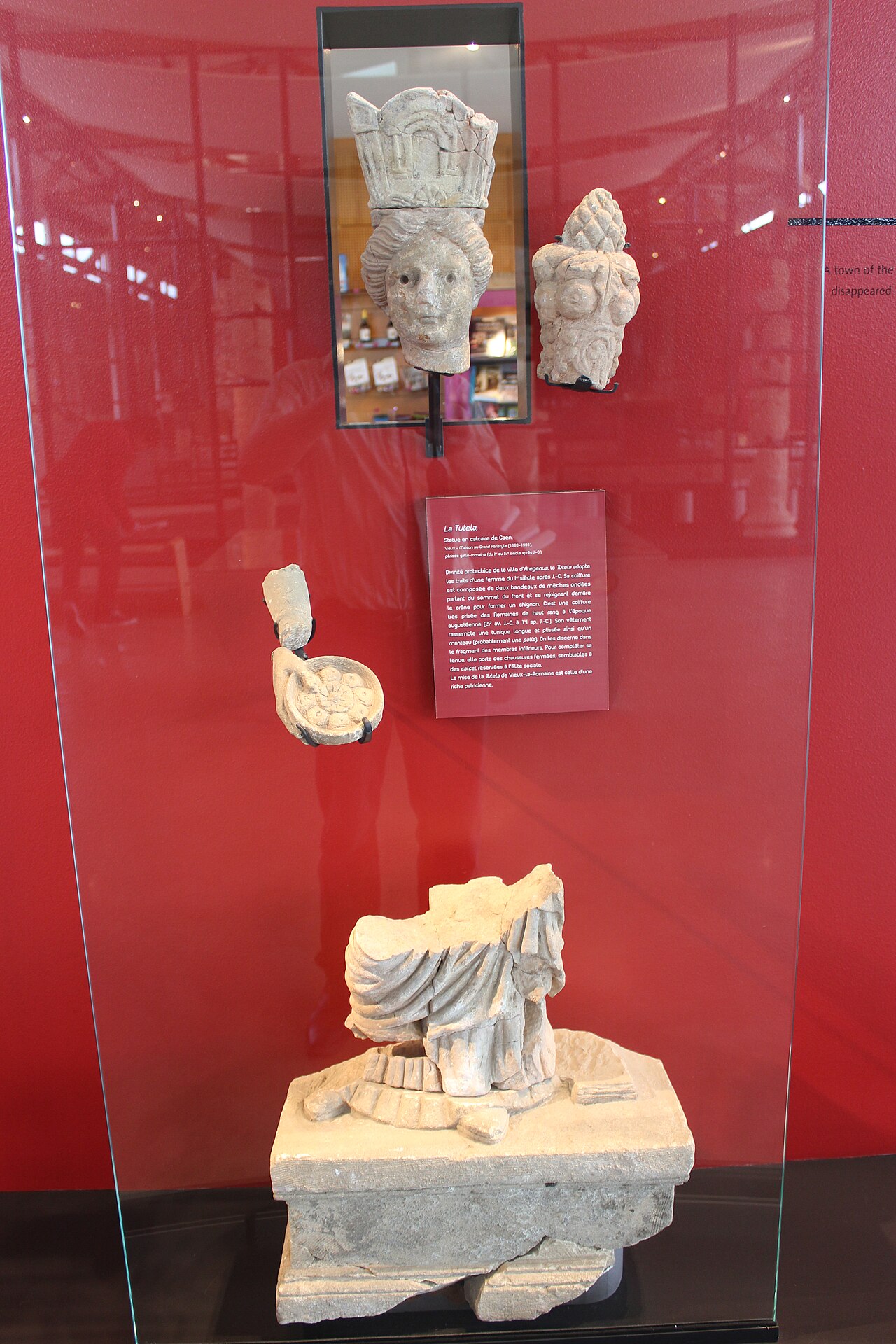
Fragmentary Gallo-Roman statue of a crowned young woman.
The Tutela de Vieux-la-Romaine is a fragmentary Gallo-Roman statue discovered in 1988 during excavations at the Maison au grand péristyle in the commune of Vieux-la-Romaine. It is one of the few Roman statues found in present-day Normandy and is preserved in the Musée archéologique de Vieux-la-Romaine, a museum established in 2002 specifically to house this artifact and other finds from the site. The statue, which portrays a young woman with a crown of towers, is considered to have artistic and religious interest that extends beyond local history, offering insight into the environment of a wealthy aristocratic family likely involved in political responsibilities in the Roman city.
- discovered
- 1988
- material
- local limestone and Caen stone
- original height
- 1 m to 1.10 m
- current location
- Musée archéologique de Vieux-la-Romaine
- culture
- Gallo-Roman
- region
- Normandy, France
Lore & Background
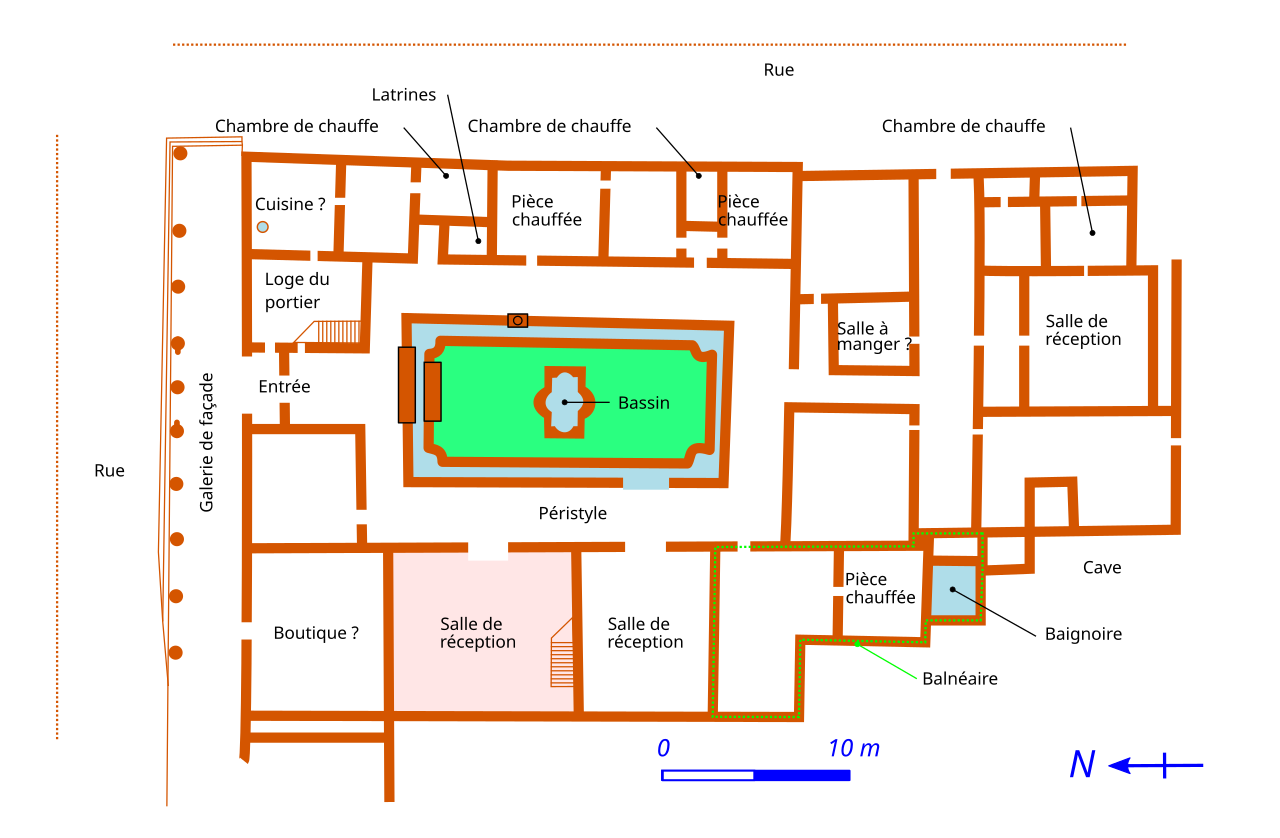
The statue was unearthed in August 1988 in the northwestern corner of a room measuring 8 m by 6.5 m, identified as a ceremonial hall on the first floor of the western wing of the Maison au grand péristyle. This aristocratic dwelling, covering approximately 1,420 m², reached its apogee in the late 1st and early 2nd centuries. The building was destroyed by fire at the end of the 3rd century, and the statue was damaged when the roof frame and walls collapsed. A later street, the Cardo Q, was laid out around 330–340, crossing the room, and materials were widely salvaged, with a homogeneous demolition layer dating from the end of the 4th to the beginning of the 5th century. An axe found during excavations dates from 475 to 550.
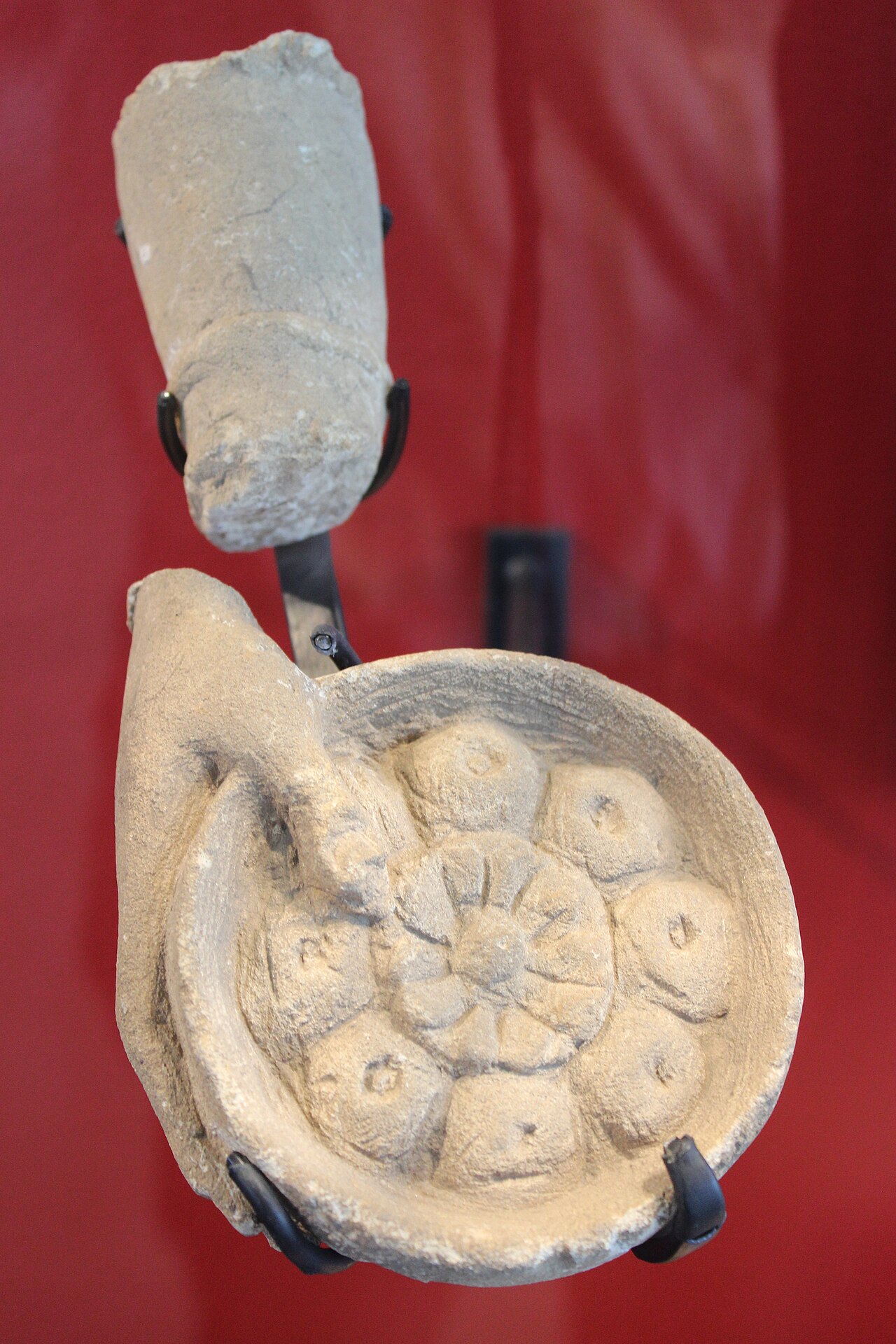
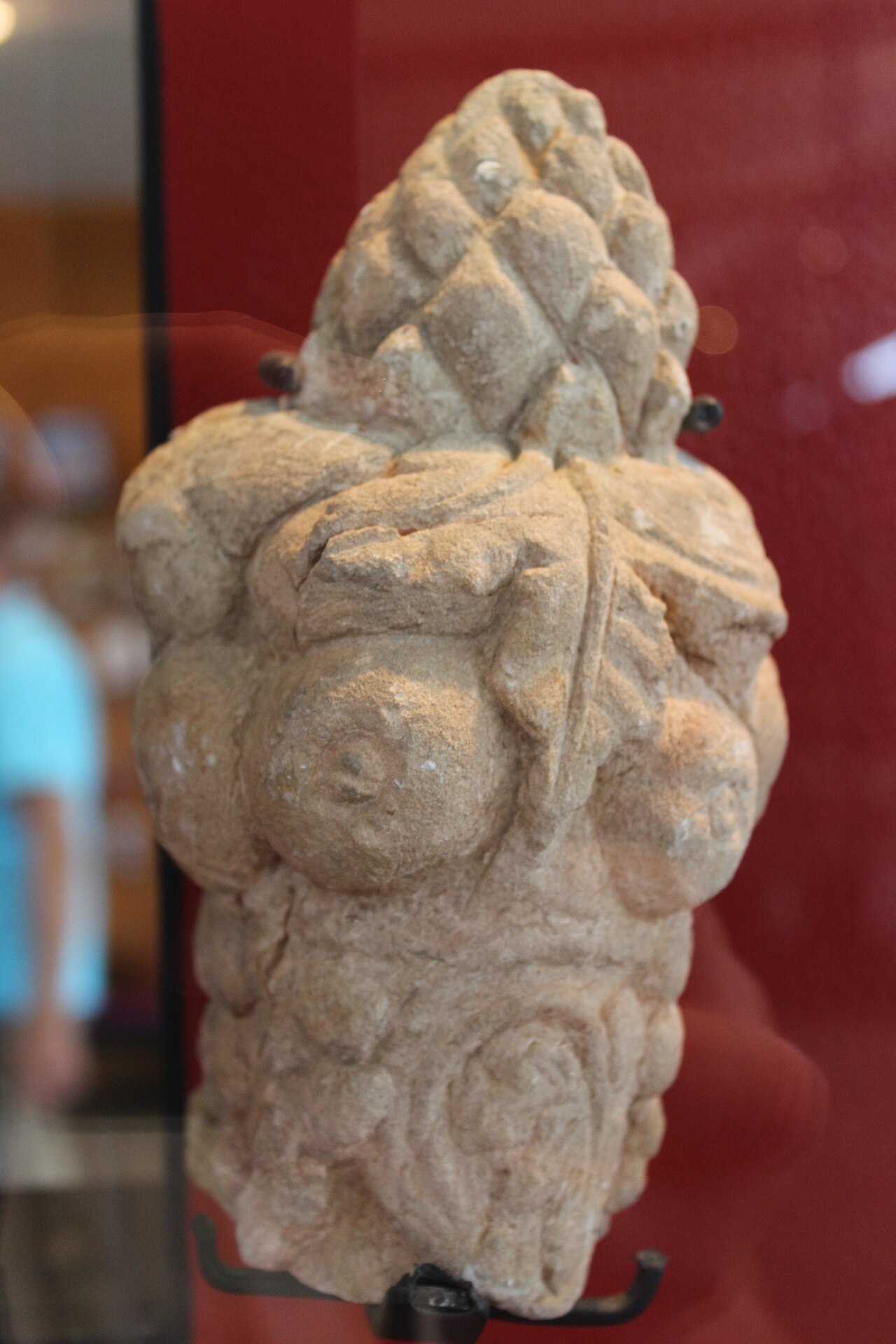
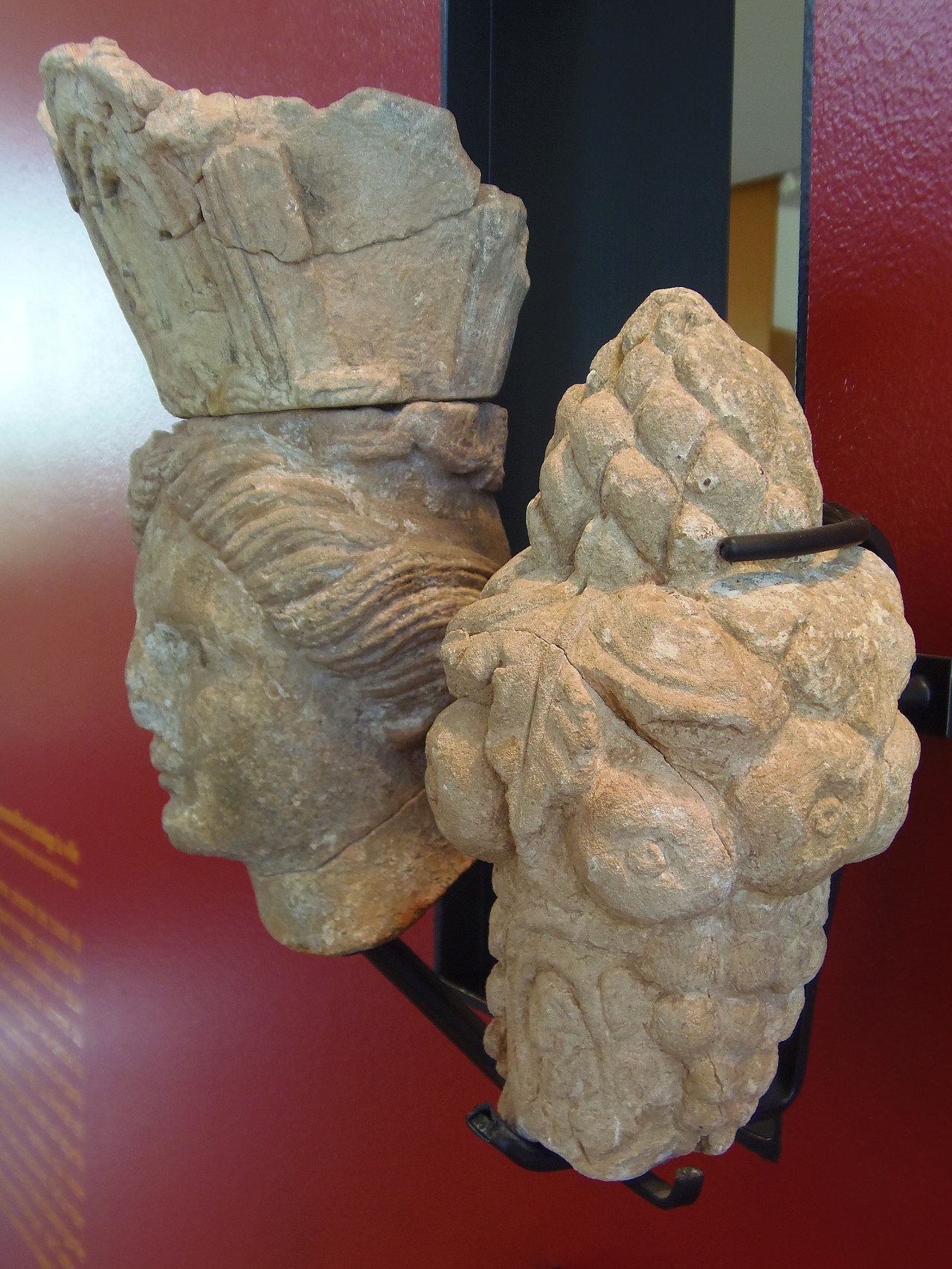
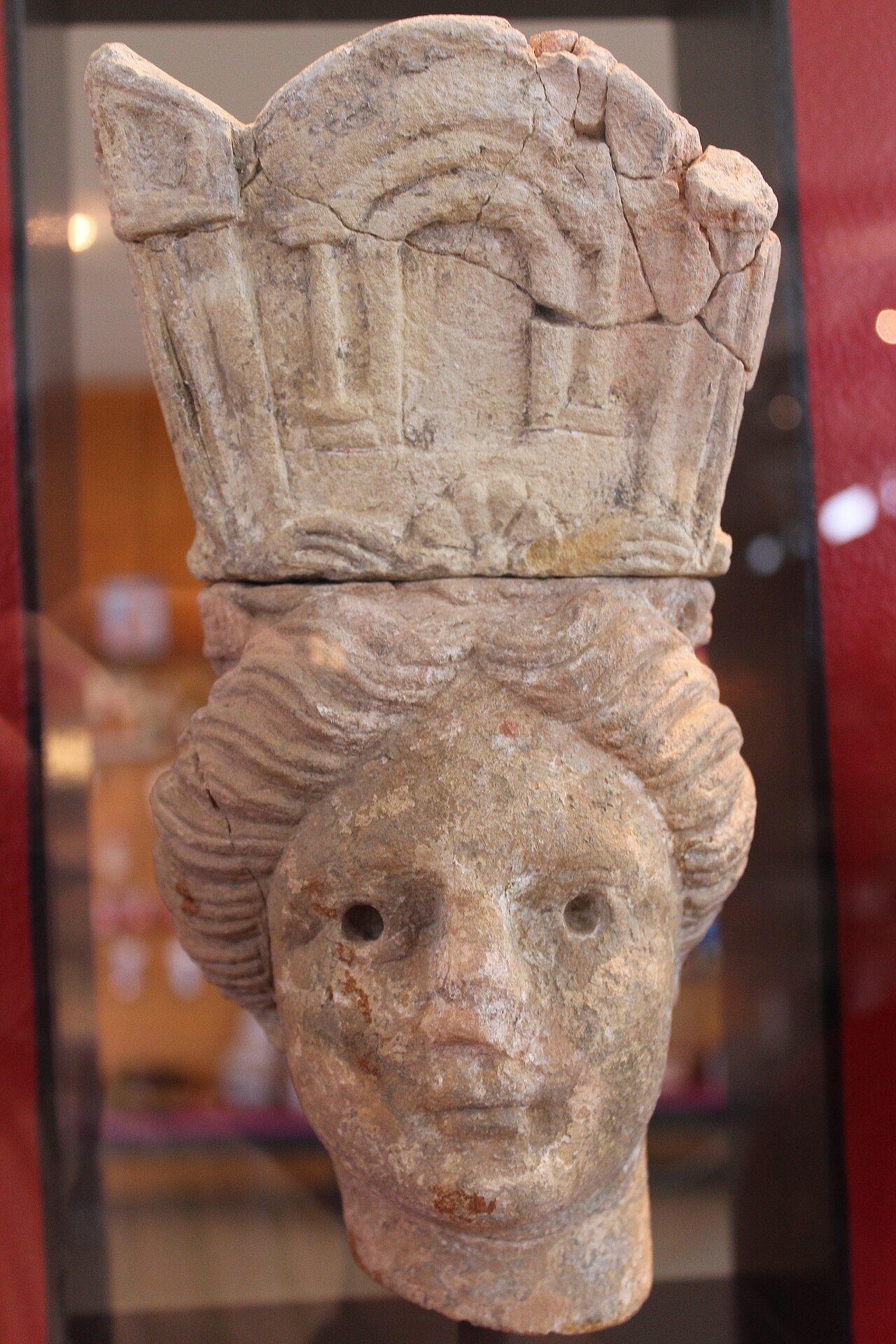
The statue depicts a young woman clothed in a tunic and cloak, grasping a cornucopia in her left hand and a coat hook in her right. She wears a crown featuring turrets, with a triumphal arch or city gate motif on the front. The head, measuring 17 cm, was discovered without its eyes, likely made of glass paste. The hair, styled in two buns at the ends, reflects Antonine fashion, particularly associated with Faustina the Younger, Bruttia Crispina, or Lucilla. The divinity of Vieux is more closely aligned with portrayals of Faustina II, executed around 160–170. The tower on the head, 11 cm high, was affixed with adhesive and features an arch, two columns, and a door. The left hand, 14 cm long, holds the cornucopia, of which only the upper part remains, showing grape clusters, a vine leaf, apples, fig leaves, and a pine cone. The right hand holds a peg with eight apples arranged around a flower, and two bracelets are on the wrist. Fragments were found 15 to 20 meters from the statue's original location.
Reader's Guide
The Tutela de Vieux-la-Romaine is significant as one of the few Roman statues discovered in Normandy, providing rare material evidence of Roman religious and artistic practices in the region. Its discovery in a wealthy aristocratic dwelling underscores the political and social status of its owners, who likely held responsibilities in the Roman city of Vieux, capital of the Viducasses. The statue's iconography—a female figure with a turreted crown, cornucopia, and city-gate motifs—identifies it as a tutela, a protective deity of a city or household, linking local Roman religion to broader imperial cults. The work's polychromy and use of local stone highlight regional craftsmanship, while its Antonine hairstyle dates it to the late 2nd century. The statue's fragmentary state and the loss of early excavation finds emphasize the challenges of reconstructing Roman urban life at Vieux, where ongoing study continues to refine understanding of the city's organization. The establishment of the Musée archéologique de Vieux-la-Romaine in 2002 specifically to house this artifact reflects its importance as a centerpiece for interpreting the site's history.
Did You Know?
- The statue was discovered in August 1988 in the northwestern corner of a room measuring 8 m by 6.5 m.
- The head, measuring 17 cm, was found without its eyes, which were likely made of glass paste.
- The crown features a triumphal arch or city gate motif with an arch, two columns, and a door.
- An axe found during excavations dates from 475 to 550.
Discovery in the Maison au Grand Péristyle
The Tutela de Vieux-la-Romaine came to light in August 1988, tucked into the northwestern corner of an 8-by-6.5-meter room on the first floor of the western wing of what was then called the Maison au petit péristyle. This ceremonial hall opened onto an interior garden and belonged to the most luxurious structure ever uncovered at the Vieux site. The building itself had a layered history: two earlier dwellings were merged into the smaller peristyle house, which was later expanded into the grand peristyle version that peaked in the late first and early second centuries, spanning roughly 1,420 square meters. The statue's fate was sealed by a fire linked to artisanal activity that brought down the roof frame and cob walls, toppling the figure. A street laid during late antiquity later cut across the room, and a Cardo Q road built around 330–340 crossed the site. The 1988 campaign marked the first large-scale excavation at Vieux since 1864, and the four campaigns devoted to this house yielded a wealth of material that prompted the creation of a dedicated site museum.
Form, Iconography, and Color
Carved from local limestone and Caen stone, the Tutela originally stood between one and 1.10 meters tall and depicted a young woman in a tunic and cloak. More than half the sculpture is missing, yet scholars see strong potential for reconstruction by comparing it with known equivalent statues. In her left hand she holds a cornucopia, and in her right a coat hook; her right leg is bent, lending the figure a subtle sense of motion. The most striking feature is the crown: it bears turrets and its front face is shaped like a triumphal arch or city gate, reinforcing the statue's civic and protective role. The piece was fixed to its base with a mortise-and-tenon joint, a mortise still visible today. Deep scorch marks from the fire that destroyed the house have left the surface with a slightly stiff appearance. Crucially, traces of polychromy were detected on the face and other sculpted elements, and since every carved piece found in the dwelling was painted, the Tutela must once have presented a vividly colorful presence in its ceremonial setting.
The Rise and Fall of Vieux
The Tutela is a find from present-day Normandy, situated ten kilometers southwest of Caen, and it stands as one of the very few Roman statues ever recovered in the region. Its home city, Vieux, served as the capital of the Viducasses tribe and was established in the first century. The town prospered through the second century, but a marked decline in prosperity at the close of that century set in motion a long transformation. Vieux was eventually absorbed into Augustodurum, the city we now know as Bayeux, and its status shrank from capital to village. The rise of Christianity as the dominant faith from the fifth century onward added another layer of change. The archaeological layer preserving the statue corresponds to a destructive fire at the end of the third century. A homogeneous demolition layer dates to the late fourth or early fifth century, while an axe recovered from the site is dated between 475 and 550, hinting at continued, if diminished, human activity long after the Roman world had receded.
Preservation, Interpretation, and Ongoing Inquiry
The significance of the Tutela extends well beyond local antiquarian interest. Its discoverer, Pascal Vipard, argued that the statue's artistic and religious value transcends the boundaries of simple regional history. The piece offers a rare window into the world of a wealthy aristocratic family who likely held political responsibilities in the Roman city, allowing scholars to reconstruct the social and ceremonial environment of that household. Recognizing the importance of the find, the Musée archéologique de Vieux-la-Romaine was explicitly established in 2002 to house the Tutela and the broader assemblage from the Maison au grand péristyle. The discovery was published as early as 1990, and the statue was exhibited at the Musée de Normandie in the second half of that year. Yet despite decades of work, a full understanding of the Roman city remains incomplete in the twenty-first century. Many findings from the earliest excavations, which began in the late seventeenth century and continued through the nineteenth, have been lost, and scholars continue to piece together the city's organization, making Vieux an active and evolving field of study.
Gallery
Frequently Asked Questions
What is the Tutela de Vieux-la-Romaine?
It is a fragmentary Gallo-Roman statue carved from local limestone and Caen stone, depicting a young woman wearing a crown of towers. Originally standing between one and 1.10 meters tall, it is one of the very few Roman-era sculptures ever uncovered in modern-day Normandy.
Where and when was the Tutela de Vieux-la-Romaine discovered?
The statue was unearthed in 1988 during archaeological excavations at the Maison au grand péristyle, a site in the commune of Vieux-la-Romaine in Normandy, France.
What does the Tutela de Vieux-la-Romaine depict?
The surviving fragment portrays a young woman crowned with a tower motif, a visual attribute commonly linked to Roman tutelary or civic deities. The figure was sculpted in local limestone and Caen stone and originally measured roughly one to 1.10 meters in height.
Where can I see the Tutela de Vieux-la-Romaine today?
It is on display at the Musée archéologique de Vieux-la-Romaine, a museum founded in 2002 with the specific purpose of housing this statue and other artifacts recovered from the excavation site.
Why is the Tutela de Vieux-la-Romaine considered important?
As one of the handful of Roman statues found in Normandy, it holds both artistic and religious significance that extends well beyond local history. The piece offers a rare window into the devotional and material culture of a wealthy Gallo-Roman community in the region.
More in Ancient Rome 1-24
Spotted an error? Know more?
This is a living reference — every entry is fact-audited, and reader corrections feed straight into our audit queue. Suggest an edit · See this site's audit record